From Warehouse Shelf to Your Doorstep: The Secret Life of Your 3 AM Order
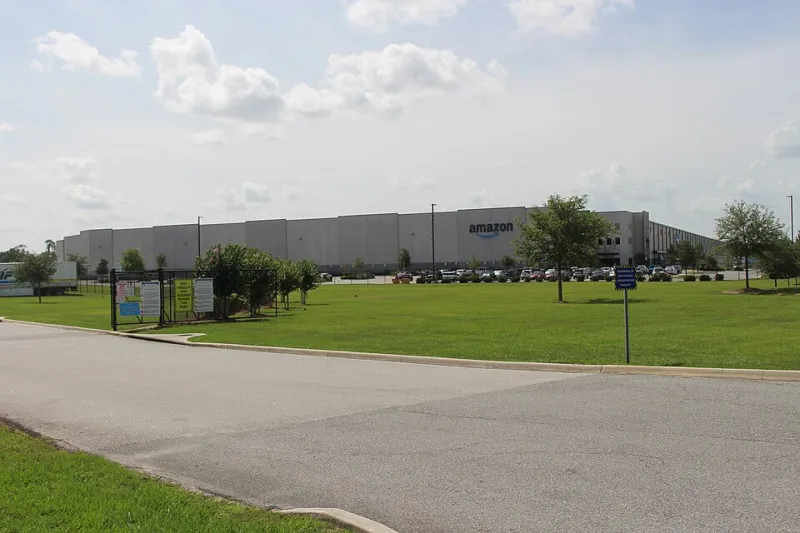
Photo: Michael Rivera, CC0, via Wikimedia Commons
The moment you hit "Place Order," something remarkable starts happening. Not at your house, not at the retailer's headquarters — but in a sprawling, humming network of warehouses, conveyor belts, and semi-trucks that never, ever stops. That order you placed at 11 PM on a Saturday? It's already moving. Here's what actually happens between your click and your porch.
Hour Zero: The Order Hits the Warehouse Floor
Your order doesn't go to "the warehouse." It goes to a warehouse — specifically, the fulfillment center the retailer's software decides is best positioned to fill it, based on what you bought, where you live, and what's in stock. This decision happens in seconds.
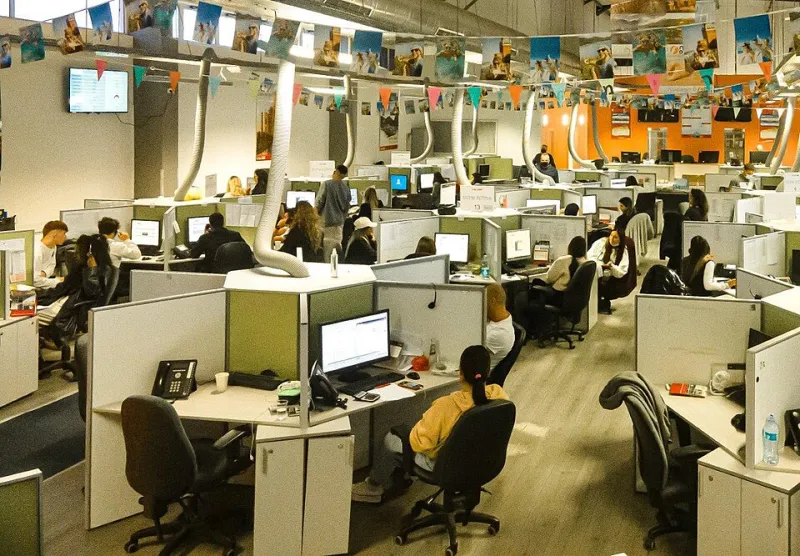
Then the physical work begins. Inside facilities the size of several city blocks, your items are picked by a combination of human workers and robots that glide across warehouse floors carrying entire shelving units to packing stations. At big operations, this runs around the clock — which is why your 3 AM order can be picked, packed, and labeled before sunrise. If your tracking ever shows a package that "shipped" at some absurd hour, now you know why: the night shift never clocks out.
The Sort: Where Packages Go Speed Dating
Once packed, your box travels to a sorting facility — and this is where the magic (and the mayhem) happens. Sortation centers are industrial ballet: packages tumble onto conveyor networks that can stretch for miles, get scanned repeatedly, and are flung down chutes toward the right outbound truck, hundreds of times per minute.
This is also where most delays are born. A missed scan, a jammed belt, a truck that leaves before your box makes the chute — any of these adds a day. That mysterious status update where your package sits "in transit" in a city you've never heard of? It's waiting for the next scheduled outbound run, because carriers move freight on fixed schedules, not on your patience.
The Last Mile: The Messiest Leg of All
Ironically, the final few miles to your house are the hardest part of the whole journey. Last-mile delivery — the driver with 180 stops and a route that recalculates constantly — is the most expensive, most delay-prone segment of the entire chain. Weather, traffic, a full truck, a driver's shift ending at hour ten: any of these can push your package from "out for delivery" to "out for delivery, again, tomorrow."
This is also why two orders placed at the same time can arrive days apart. If one was fulfilled from a nearby regional center and the other from across the country, they took completely different journeys despite identical checkout clicks.
Reading Tracking Data Like an Insider
Here's where being a 24/7 shopper pays off. Tracking statuses follow patterns, and once you know them, you can predict your delivery better than the app can:
- "Label created" for more than 24 hours: The retailer printed a label but the carrier hasn't received the package yet. Common with third-party sellers — expect a delay, but usually nothing serious.
- "Arrived at facility" in your state: You're close. Typically one to two days out.
- "In transit" stuck for 3+ days: Worth a nudge to the seller. Packages do occasionally get misrouted, and early reports get them reshelved and reshipped faster.
- "Out for delivery" after 8 PM: It probably didn't make the truck. Don't stay up for it.
Why This Makes You a Smarter Shopper
Understanding the machine changes how you shop. Ordering by early evening often means your package makes that night's outbound sort — a free day of shipping speed. Buying from a seller whose warehouse is in your region beats a cheaper seller shipping cross-country, once you factor in the delay risk. And during peak season, when the whole network runs hot, building in an extra two or three days is just realistic, not pessimistic.
The Never-Closing Machine
The wildest part of all this? The system never stops. Right now, at 3 AM, somewhere a robot is carrying a shelf of phone cases toward a packing station, a sorter is reading a barcode, and a driver is loading the first route of the morning. Every time you shop at midnight, you're plugging into an operation that was built — deliberately, expensively, brilliantly — for people exactly like you.